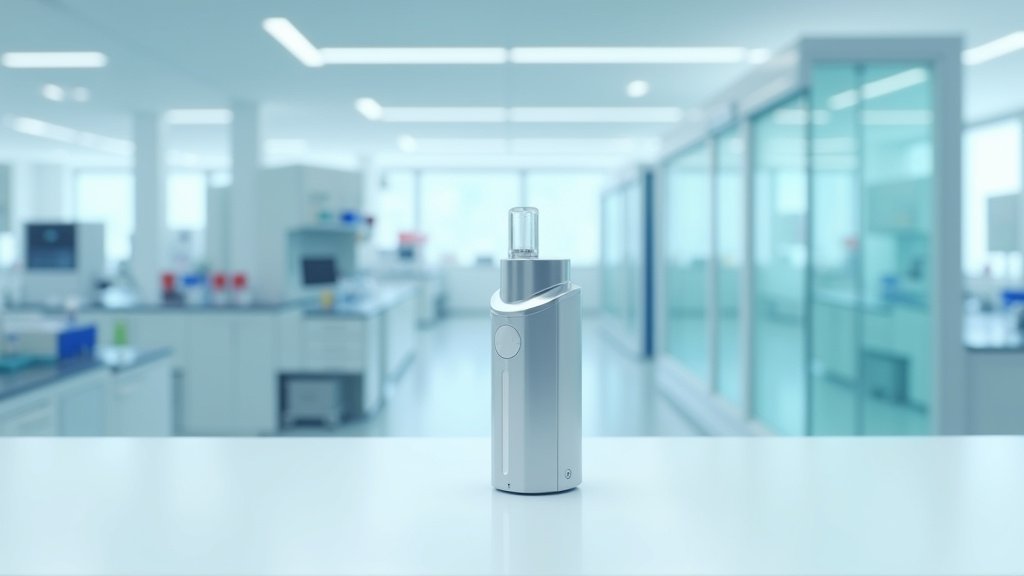
Curaleaf International has officially secured a major regulatory victory in Australia, achieving the country’s first-ever Therapeutic Goods Administration (TGA) registration for a liquid medical cannabis inhalation device. This pivotal development not only establishes a new benchmark for clinical-grade delivery systems in the Australian medical cannabis market but also underscores the company’s aggressive and strategic expansion into the New Zealand region. By bridging the gap between rigorous regulatory compliance and innovative pharmaceutical delivery, Curaleaf is positioning itself as a primary architect of the evolving APAC medical cannabis landscape.
Key Highlights
- Regulatory Milestone: Curaleaf International has secured TGA registration for the first liquid medical cannabis inhalation device in Australia, a move that sets a new precedent for quality and safety standards in the region.
- Trans-Tasman Expansion: The company is formally expanding its medical cannabis operations into New Zealand, leveraging existing regulatory frameworks to provide patients with access to established product lines.
- Strategic Positioning: This dual achievement signifies a major leap in Curaleaf’s APAC growth strategy, prioritizing clinical-grade medical delivery systems over traditional methods.
Advancing Oceania’s Medical Cannabis Infrastructure
The regulatory landscape for medical cannabis in the Oceania region is notoriously complex, characterized by stringent quality controls, rigorous pharmacovigilance requirements, and a persistent need for clinical validation. Curaleaf International’s recent success with the Therapeutic Goods Administration (TGA) represents a significant departure from the historical reliance on unregulated or minimally tested delivery hardware. For years, the Australian medical community has advocated for more standardized, dose-controlled methods of administration. The TGA registration of this specific liquid inhalation device signifies a transition toward medical-grade, pharmaceutical-compliant delivery mechanisms that provide physicians with greater confidence in prescribing cannabis-based therapies.
The Engineering of Efficacy
The medical community has long recognized the bioavailability benefits of inhalation compared to oral ingestion. However, the lack of standardized, validated hardware has often been a barrier to clinical adoption. By securing TGA registration, Curaleaf is not merely introducing a new consumer product; it is introducing a medical device that meets the highest standards for consistency, heat regulation, and dosing precision. This hardware is designed to optimize the therapeutic index of medical cannabis, ensuring that patients receive a consistent and predictable dose, which is essential for managing chronic conditions—from intractable pain to severe neurological disorders. This move aligns with global trends in cannabis medicine, where the shift toward vaporization and precision dosing is replacing antiquated, combustible consumption methods.
Scaling the Trans-Tasman Market
While the Australian market represents the immediate testing ground for this hardware, the expansion into New Zealand marks a critical milestone in Curaleaf’s broader APAC strategy. New Zealand’s Medicinal Cannabis Scheme, while distinct in its regulatory framework compared to Australia, offers a structured pathway for market entry that Curaleaf is well-positioned to navigate. By introducing its established portfolio into the New Zealand market, the company is effectively creating a trans-Tasman network of care. This expansion is not just about volume; it is about infrastructure. Establishing supply chains and regulatory pathways in both nations simultaneously allows Curaleaf to achieve operational efficiencies that smaller, localized competitors cannot match.
The Economic and Clinical Ripple Effect
There is a broader economic dimension to this news. The medical cannabis sector in Oceania is transitioning from a speculative, growth-heavy industry into a mature, healthcare-integrated market. Investors and stakeholders should view this TGA approval as a signal of market maturation. Companies that can bridge the divide between cannabis cultivation and clinical-grade, TGA-registered hardware are the most likely to command significant market share. Furthermore, the economic impact is felt by the patient, as insurance integration, clinical research, and prescriber confidence typically follow regulatory registration. As this technology becomes more widely available, the total addressable market (TAM) in both Australia and New Zealand is likely to expand, driven by physicians who are now more comfortable recommending regulated, device-assisted treatment options.
Future-Proofing Patient Outcomes
Looking ahead, the synergy between device and product—the “integrated delivery system”—is the next frontier. By controlling the device, the dosage, and the formulation, Curaleaf is creating a closed-loop system that maximizes safety and clinical efficacy. The future of medical cannabis in this region will be defined by companies that can replicate this level of regulatory success. As New Zealand continues to refine its domestic policy and Australia deepens its integration of cannabis into standard medical practice, Curaleaf International is currently positioned at the forefront of this shift, potentially setting the stage for further product and hardware innovations in the coming fiscal years.
FAQ: People Also Ask
1. What does TGA registration mean for Australian medical cannabis patients?
TGA registration indicates that the medical device has undergone a rigorous review process for safety, quality, and performance. For patients, it means the hardware is considered a validated medical product rather than a consumer accessory, providing greater peace of mind regarding safety and dosing accuracy.
2. Is this inhalation device considered the same as smoking cannabis?
No. The TGA-registered device is a specialized medical vaporizer designed to heat medical cannabis to precise temperatures without combustion. This process, often referred to as ‘vaporization,’ is designed to extract active cannabinoids while minimizing the harmful byproducts associated with burning plant material.
3. How does this impact the New Zealand medical cannabis market?
Curaleaf’s entry into New Zealand expands the availability of high-quality, clinically-tested medical cannabis products for Kiwi patients. It introduces competition and high-standard products into a market that is actively seeking to improve access and affordability through its established Medicinal Cannabis Scheme.
4. Why is Curaleaf International focusing on hardware as well as products?
By providing both the medical cannabis formulation and the delivery device, the company ensures a standardized patient experience. This ‘integrated delivery’ model allows for exact dosing, which is a critical requirement for physicians prescribing treatment, thereby enhancing the therapeutic outcomes for patients.