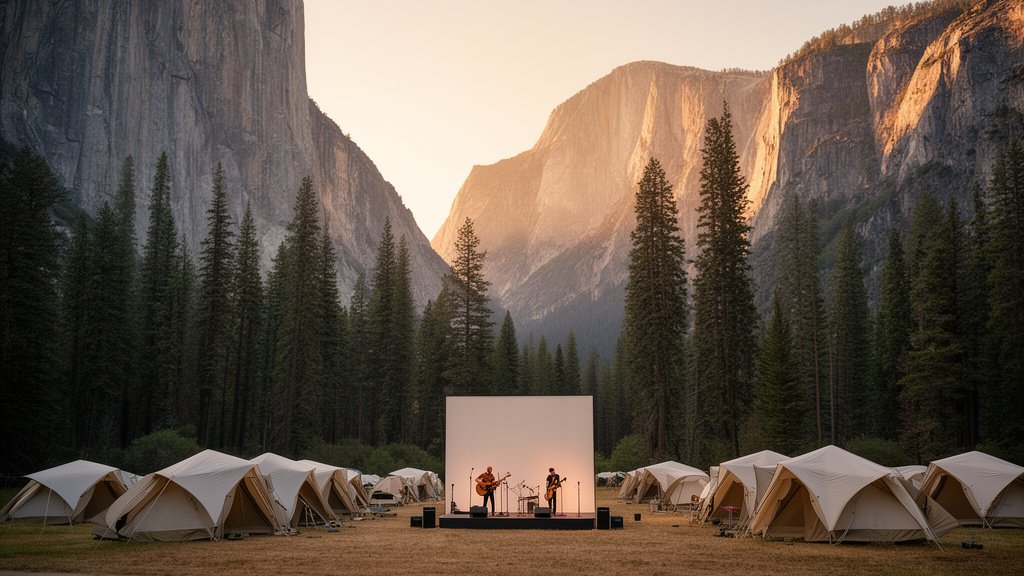
Camp Kushstock is scheduled to take place on October 23, 2026, in Yosemite Valley, CA, positioning itself as a pivotal cultural event that seeks to bridge the gap between outdoor recreation and cannabis advocacy. The festival, which promises a curated blend of live musical performances, immersive art installations, and collaborative camping experiences, has already drawn significant attention for its ambitious choice of venue within one of the world’s most protected natural landscapes.
Key Highlights
- Date and Location: The event is officially scheduled for October 23, 2026, in Yosemite Valley, California.
- Programming: The festival will feature a multi-disciplinary approach, combining live acoustic music, curated art galleries, and shared camping logistics.
- Regulatory Complexity: The gathering faces immediate scrutiny regarding the interplay between California’s legal cannabis status and the federal jurisdiction of Yosemite National Park.
- Cultural Impact: Organizers are positioning the event as a dialogue-driven gathering, intended to foster discussion on environmental stewardship and the normalization of cannabis culture in the outdoors.
The Intersection of Culture and Federal Oversight
Camp Kushstock represents an audacious attempt to normalize cannabis culture within the context of a rugged, outdoor-centric festival model. Unlike typical urban cannabis conventions, which often rely on enclosed convention centers, this gathering seeks to transplant that energy into the heart of the Sierra Nevada. This move places the event squarely in the crosshairs of long-standing federal statutes. As Yosemite Valley is under the jurisdiction of the National Park Service (NPS), the event must navigate federal regulations that explicitly prohibit the possession and use of marijuana, regardless of California’s state-level legalization efforts.
Industry analysts and legal observers are watching closely to see how the event organizers plan to reconcile these overlapping jurisdictions. For the cannabis community, the event is being framed not as an act of defiance, but as a deliberate effort to engage in “responsible advocacy.” The organizers have stated that the focus will be on the educational aspects of cannabis, the appreciation of natural ecosystems, and a “Leave No Trace” philosophy that mirrors the strict environmental protections of the National Park system.
Mapping the Cultural Shift
To understand the significance of Camp Kushstock, one must look at the evolution of California’s cannabis tourism. Historically, the industry has been siloed in Northern California, specifically regions like the Emerald Triangle. By moving the festival to Yosemite, the event organizers are signaling a desire to elevate cannabis culture out of the shadows and into the mainstream discourse of outdoor luxury. This is an intentional pivot from the “stoner” stereotype toward an “outdoor enthusiast” persona.
Entities such as the California Department of Cannabis Control (DCC) and local environmental advocacy groups are likely to monitor the event’s logistics closely. The festival is expected to serve as a litmus test for how the cannabis industry can integrate with mainstream tourism boards and outdoor recreational organizations. If successful, the organizers argue, it could pave the way for a new subclass of “responsible cannabis retreats” that operate in harmony with land management policies, though skeptics maintain that federal land presents an insurmountable barrier to such integration.
Environmental Stewardship as a Core Tenet
Central to the event’s pitch is its commitment to sustainability. Recognizing the fragile ecosystem of Yosemite Valley, the festival organizers have touted a strict sustainability charter. This includes mandatory waste management protocols, the use of low-impact infrastructure, and educational seminars led by botanists and environmental scientists. The goal, according to promotional materials, is to create a symbiotic relationship between the event and the land. Whether this rhetoric translates into operational reality remains the primary question for park officials and local residents concerned about traffic, noise, and environmental degradation in a high-traffic tourist zone.
Economic and Social Predictions
From an economic standpoint, Camp Kushstock could be a bellwether for the future of cannabis-related event tourism. If the festival proceeds, it will likely provide a blueprint for how future organizers handle security, transportation, and legal compliance in restricted areas. However, the risk of cancellation or legal intervention is high, given the sensitivity of federal land. The outcome of this event will likely influence future permitting processes for niche festivals across the state, potentially forcing a stronger collaboration between private festival organizers and public land managers.
FAQ: People Also Ask
Is cannabis consumption legally permitted at Camp Kushstock in Yosemite?
No. As Yosemite Valley is federal land managed by the National Park Service, cannabis remains prohibited under federal law, regardless of its legal status in the state of California. Organizers have not released specific details on how they intend to navigate this federal enforcement reality.
What are the primary activities planned for the event?
The event is set to focus on live acoustic musical performances, art installations, and communal camping. It is designed to be an outdoor experience rather than a commercial expo.
How will the event impact Yosemite’s local environment?
Organizers claim they will implement a strict “Leave No Trace” policy. However, environmental groups and local authorities remain cautious about the impact of a high-density event on the valley’s delicate natural ecosystem.
Will there be shuttle services for attendees?
Logistics are still being finalized. Due to the high traffic volume in Yosemite Valley, attendees are encouraged to monitor official channels for updates regarding transit, parking, and accommodation requirements.