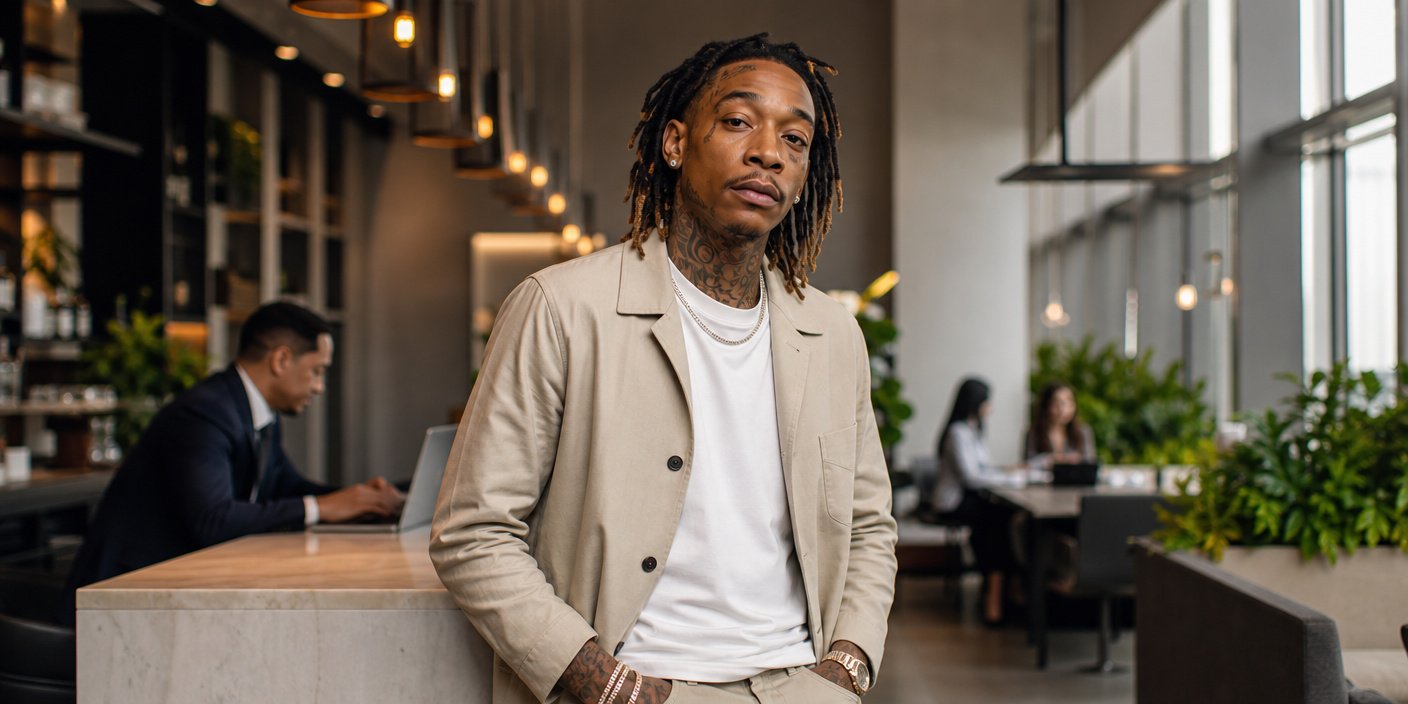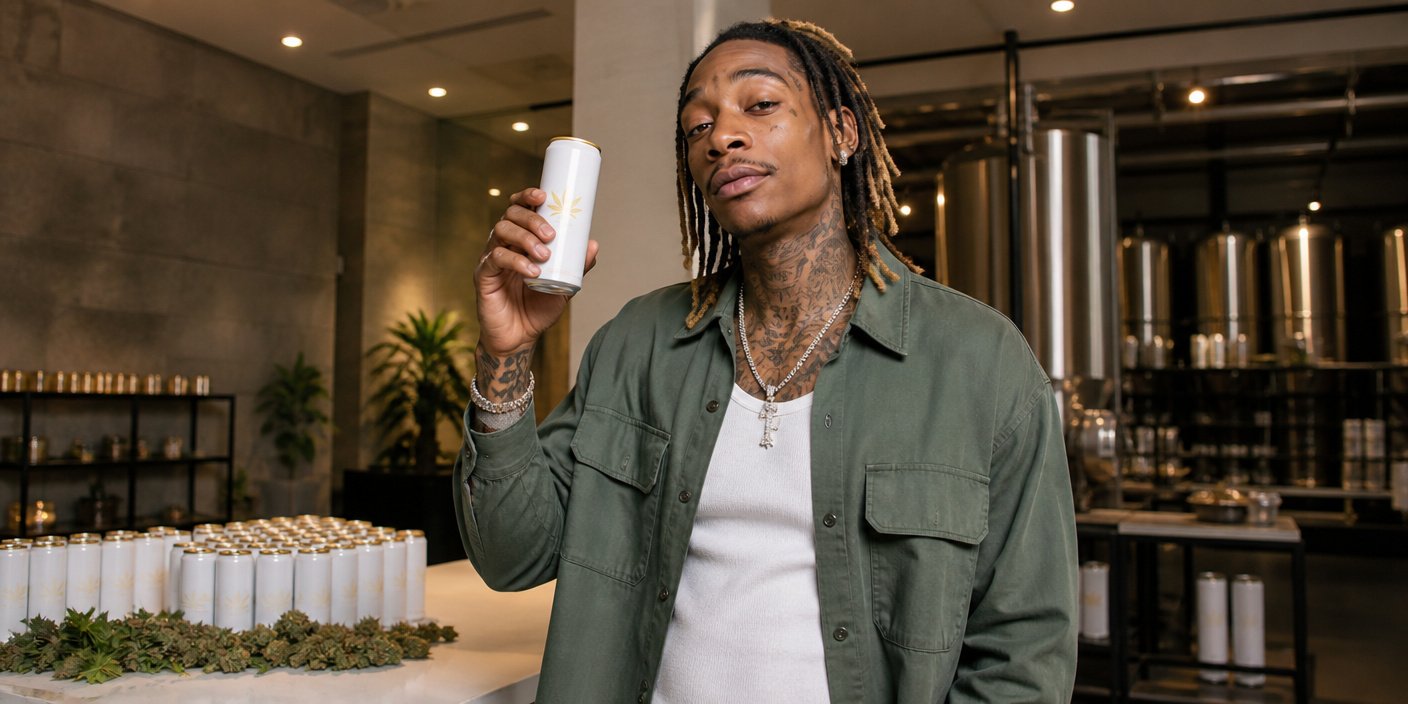
Wiz Khalifa is officially transitioning from the stage to the shelves with the launch of his new hemp-derived THC-infused beverage line, a collaboration with the Atlanta-based Scofflaw Brewing Co. This strategic move marks a significant expansion for the Khalifa Kush brand, moving beyond traditional cannabis flower and concentrates into the rapidly growing, ready-to-drink (RTD) market. By leveraging Scofflaw Brewing’s established production capabilities and distribution network, Khalifa is positioning this new offering as a premium, accessible lifestyle beverage, with four-packs retailing starting at $15, directly targeting the ‘California Sober’ demographic and those seeking controlled-dose alternatives to alcohol.
Key Highlights
- Strategic Collaboration: The product launch is a direct partnership between Wiz Khalifa’s brand, Khalifa Kush, and Scofflaw Brewing Co., combining celebrity brand power with established craft brewing infrastructure.
- Hemp-Derived Compliance: The beverages are formulated using hemp-derived THC, allowing them to legally operate under the current federal guidelines established by the 2018 Farm Bill, ensuring broad distribution potential.
- Accessible Pricing: With a competitive price point starting at $15 for a four-pack, the brand is positioning itself as a premium yet accessible entry point into the THC-beverage market.
- Category Expansion: This move signals a wider industry trend where legacy cannabis brands are diversifying into social tonics to capture the wellness-conscious, non-alcoholic drinking consumer.
The Strategic Pivot: Khalifa Kush Enters the Beverage Industry
The cannabis beverage sector is currently experiencing a renaissance, driven by evolving consumer preferences that favor moderate, consistent dosing over traditional combustion methods. Wiz Khalifa’s entry into this space through his brand, Khalifa Kush, represents a calculated evolution of his business portfolio. For years, the ‘Khalifa Kush’ (KK) moniker has been synonymous with high-quality cannabis flower and concentrates. By shifting into liquid form, the brand is effectively lowering the barrier to entry for his massive fan base while tapping into the burgeoning market of consumers who are ‘sober-curious’ or looking for a social buzz without the negative aftereffects of alcohol.
The Partnership: Where Hip-Hop Meets Craft Brewing
Partnering with Scofflaw Brewing Co. was a deliberate choice. Scofflaw, a staple of the Georgia craft beer scene, brings years of expertise in carbonation, flavor profiling, and, crucially, supply chain logistics. Brewing a THC-infused beverage is vastly different from traditional beer production; it requires specialized equipment to ensure the emulsification of cannabinoids, which are hydrophobic (they do not naturally mix with water).
Scofflaw’s ability to scale production while maintaining flavor integrity has been the cornerstone of this launch. This partnership allows Khalifa Kush to bypass the logistical headaches that often plague startups in the cannabis space. Instead of building a manufacturing plant from scratch, Khalifa Kush is utilizing Scofflaw’s existing facility, allowing for a rapid rollout to market. This model—where celebrity brands ‘white label’ or partner with established beverage manufacturers—is quickly becoming the blueprint for success in the cannabis industry, minimizing overhead while maximizing distribution reach.
The Science and Legal Landscape of Hemp-Derived THC
The central factor that makes this product launch possible nationwide (or in states where hemp-derived cannabinoids are regulated) is the 2018 Farm Bill. This legislation legalized hemp—defined as cannabis with less than 0.3% Delta-9 THC on a dry weight basis—at the federal level. By utilizing hemp-derived Delta-9 THC, Khalifa Kush can formulate drinks that provide the desired psychoactive effects within a legal framework that is significantly more flexible than the highly restrictive, state-by-state medical and recreational cannabis markets.
This legal nuance is vital. Unlike traditional cannabis beverages, which are often locked within the ‘dispensary-only’ silo, these drinks can theoretically be sold in retail locations where alcohol is sold, provided state laws align. This opens up massive potential for convenience store, grocery, and liquor store placement. The formulation team behind the drink has focused on a rapid onset and a shorter duration of effect compared to traditional edibles, making it an ideal ‘social’ drink rather than an ‘end-of-the-day’ heavy sedative.
Economic Viability: The $15 Price Point Strategy
In the current economic climate, where inflation has hit consumer discretionary spending, pricing is a major differentiator. While many high-end ‘social tonics’ or cannabis beverages have hit the market at $8 to $12 per single can, the decision to offer a four-pack starting at $15 is a aggressive, consumer-friendly play. It effectively brings the price per unit down, positioning the product not as a luxury novelty, but as a recurring, weekly purchase.
This pricing strategy serves two purposes: it drives volume and it encourages trial. By making the product affordable, Khalifa Kush is inviting the casual consumer who might be skeptical about spending $10 on a single mystery drink to give it a try. If the consumer experience is consistent—meaning the flavor is high-quality and the effect is predictable—this price point will be the primary driver for brand loyalty in a crowded and noisy shelf space.
Future Market Expansion and Cultural Impact
Looking ahead, the collaboration between Khalifa Kush and Scofflaw Brewing is likely just the beginning. The industry is watching closely to see how quickly the product can scale across different states. If successful, this could serve as a case study for other artists and influencers looking to monetize their brand in the ‘Green Rush.’
Furthermore, the long-term impact on the alcohol industry cannot be ignored. As more high-profile celebrities enter the cannabis beverage space, they pull dollars away from traditional beer and spirits. This isn’t just about launching a new product; it is about fundamentally altering how a generation chooses to consume social ‘adult beverages.’ With Wiz Khalifa at the helm, the brand has the cultural capital to normalize this shift, turning what was once a counter-culture activity into a standard, premium lifestyle choice.
FAQ: People Also Ask
Q: Are these drinks legal in all states?
A: The products are formulated with hemp-derived THC, which falls under the 2018 Farm Bill guidelines. However, state laws regarding hemp-derived cannabinoids vary significantly. Consumers should check local regulations before purchase.
Q: Where can I buy Khalifa Kush THC drinks?
A: The product is launching with a focus on direct-to-consumer online sales and initial availability in Georgia, with plans for broader retail expansion as the distribution network grows.
Q: How do these drinks compare to alcohol?
A: These drinks are non-alcoholic and are marketed as a ‘social tonic,’ providing a mild, controlled psychoactive effect from hemp-derived THC without the hangover or calorie count associated with many alcoholic beverages.
Q: Does the product contain CBD or THC?
A: The primary active ingredient for the ‘buzz’ is hemp-derived Delta-9 THC. Some formulations may include other cannabinoids, but the primary marketing focus is on the THC content for the desired effect.