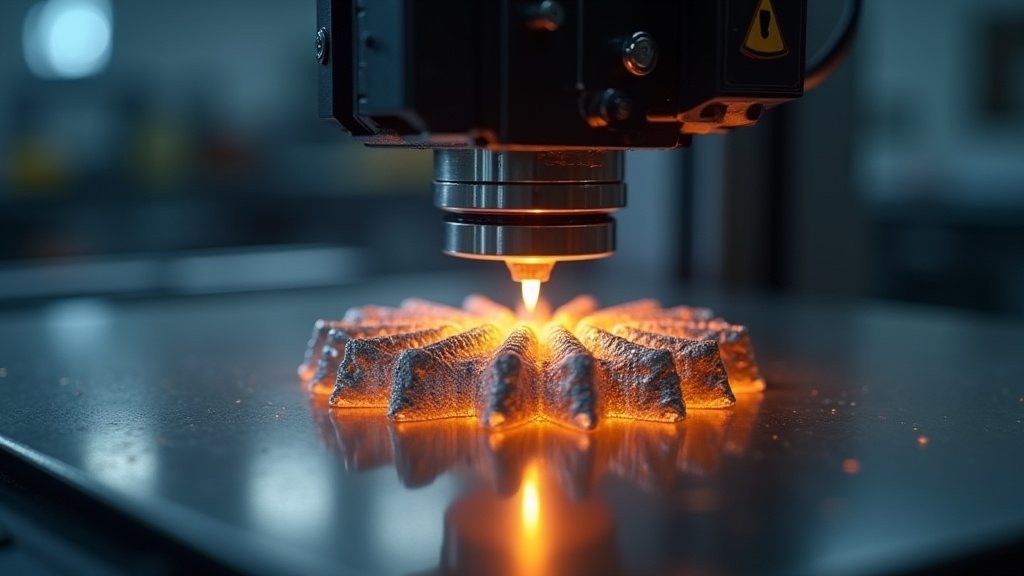
The Natural Sciences and Engineering Research Council of Canada (NSERC) has announced significant new funding to advance 3D printing technologies. This investment will support research into novel materials, advanced printing techniques, and the development of new applications across various sectors, aiming to bolster Canada’s innovation capacity.
Key Highlights:
- New funding allocated for 3D printing research and development.
- Focus on novel materials and advanced printing techniques.
- Aims to expand applications in sectors like healthcare, aerospace, and manufacturing.
- Investment underscores Canada’s commitment to technological advancement.
Advancing Additive Manufacturing in Canada
The latest funding initiative from NSERC is poised to accelerate the adoption and refinement of additive manufacturing, commonly known as 3D printing. This strategic investment targets key areas within the 3D printing ecosystem, from the fundamental science of new printable materials to the sophisticated engineering required for next-generation printers and processes. Researchers are expected to explore a wide array of possibilities, including bio-printing for medical implants, high-strength composites for aerospace components, and rapid prototyping for consumer goods.
Innovations in Materials Science
A significant portion of the funding will be directed towards the development of novel materials for 3D printing. This includes exploring advanced polymers, ceramics, and metal alloys that offer enhanced properties such as greater durability, flexibility, or biocompatibility. The goal is to move beyond current limitations, enabling the creation of complex geometries with superior performance characteristics. This research is crucial for unlocking the full potential of 3D printing in demanding applications where material integrity is paramount.
Next-Generation Printing Techniques
Beyond materials, the funding will also foster innovation in the printing processes themselves. Researchers will investigate techniques to improve printing speed, resolution, and scalability. This could involve exploring new additive methods, optimizing existing ones like fused deposition modeling (FDM) or stereolithography (SLA), and developing AI-driven control systems to ensure precision and consistency. The drive is towards making 3D printing more efficient and accessible for widespread industrial adoption.
Expanding Application Horizons
The investment aims to catalyze the application of 3D printing across diverse industries. In healthcare, this could mean customized prosthetics, patient-specific surgical guides, or even lab-grown tissues. The aerospace sector could benefit from lighter, stronger components that reduce fuel consumption. Manufacturing industries may see increased use of 3D printing for tooling, jig, and fixture production, as well as for creating intricate parts that are difficult or impossible to produce with traditional methods. This broad application focus highlights the transformative potential of additive manufacturing for the Canadian economy.
FAQ: People Also Ask
What is NSERC and what is its role in funding research?
NSERC, the Natural Sciences and Engineering Research Council of Canada, is a federal agency that promotes and supports university research and training in the natural sciences and engineering. Its role is to invest in people, discoveries, and partnerships to build a better future for Canada.
How can 3D printing benefit the healthcare industry?
3D printing offers numerous benefits to healthcare, including the creation of patient-specific implants and prosthetics, customized surgical tools, anatomical models for pre-surgical planning, and the potential for bioprinting tissues and organs.
What are the key challenges in current 3D printing technology?
Current challenges include limitations in material selection, slower printing speeds for complex or large-scale objects, ensuring consistent quality and mechanical properties, and the high cost of advanced equipment and materials.
How does this NSERC funding aim to address these challenges?
The funding aims to tackle these challenges by supporting research into new materials with improved properties, developing faster and more precise printing techniques, and exploring advanced control systems and AI to enhance quality and scalability.
What is the anticipated economic impact of advancing 3D printing in Canada?
Advancing 3D printing can lead to increased manufacturing competitiveness, the creation of high-value jobs, shorter product development cycles, reduced waste, and the development of new Canadian industries and export opportunities.