In a strategic maneuver that could redefine the intersection of consumer-packaged goods and the regulated cannabis market, Sup, Inc. has officially launched its personal infusion platform in Missouri. This rollout represents more than just a new product on dispensary shelves; it serves as a critical bridge designed to lower the barrier to entry for beverage consumers who have historically felt alienated by the traditional dispensary experience. By partnering with Blue Arrow, a prominent cannabis operator, Sup, Inc. is attempting to shift the narrative from raw product sales to functional, lifestyle-integrated consumption.
The Mechanism of Modern Infusion
At the core of the Sup, Inc. value proposition is the concept of a ‘personal infusion platform.’ Unlike pre-dosed cannabis beverages—which are often subject to strict regulatory volume limits and heavy shipping costs due to liquid weight—Sup’s solution offers a concentrated, shelf-stable format that consumers can add to their own drinks. This technical approach effectively sidesteps the logistical challenges that have plagued the cannabis beverage sector for years. By allowing users to control their own dosage and pairing, the platform mimics the experience of a standard drink mix or craft cocktail element, rather than a clinical medical product. This normalization of consumption is pivotal for capturing the ‘beverage-curious’ demographic that currently occupies the space between total abstinence and active cannabis usage.
Decoding the Product Line: Neat vs. Night Cap
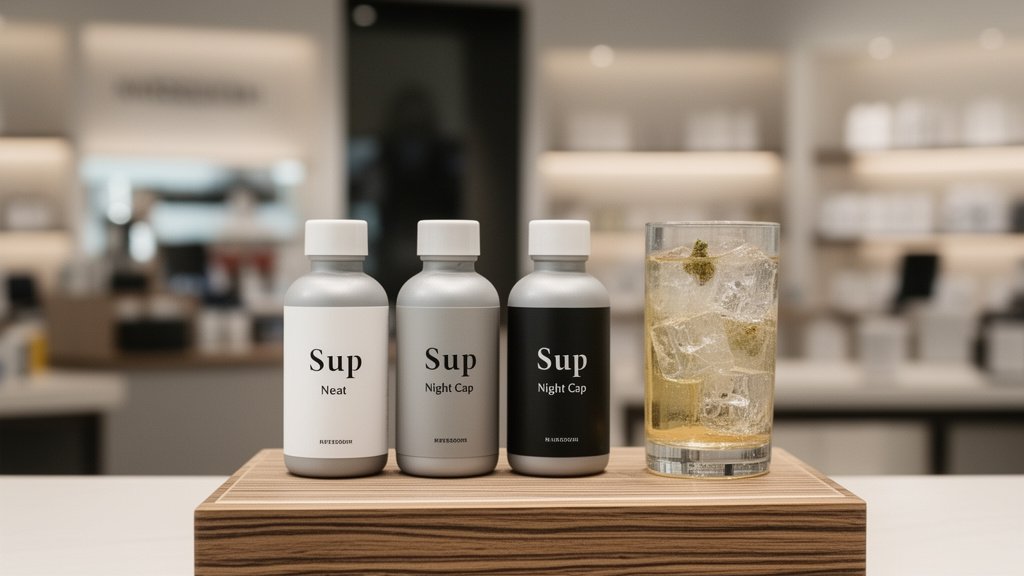
Understanding the target demographic requires a look at the two flagship offerings: ‘Sup Neat’ and ‘Sup Night Cap.’
‘Sup Neat’ is positioned as the standard infusion, designed to offer a clean, consistent experience for general consumption. It targets the consumer who wants to integrate cannabis into a social or mid-day setting without the complexity of traditional smoking or vaping.
‘Sup Night Cap,’ conversely, leans heavily into the functional wellness trend. By incorporating CBN (Cannabinol), a minor cannabinoid increasingly marketed for its potential sleep-supporting properties, the product targets the health-and-wellness-oriented consumer. The focus on specific cannabinoid profiles—rather than generic THC concentrations—aligns with broader industry trends toward precision dosing and ‘effect-based’ consumption. This segmentation is a sophisticated play to capture consumers looking for targeted outcomes, such as relaxation or sleep, rather than just intoxication.
The Strategic Blue Arrow Partnership
No product launch exists in a vacuum, particularly in the highly regulated Missouri market. The partnership with Blue Arrow serves as the essential logistics and regulatory backbone. As an established cannabis operator, Blue Arrow provides the compliant distribution channels necessary to bring Sup’s platform to the retail level. This relationship is emblematic of a larger industry trend where tech-forward product developers ‘piggyback’ on the licensed infrastructure of established operators to minimize regulatory friction. For Blue Arrow, carrying the Sup line offers a competitive advantage: it diversifies their inventory away from volatile flower and concentrate markets into a stable, long-term CPG (Consumer Packaged Goods) revenue stream.
Economic Implications: Bridging the Beverage Gap
The economic impact of this launch is multifaceted. First, it addresses the ‘beverage-curious’ market, which represents a significant untapped revenue stream. Many consumers who enjoy craft sodas, cocktails, or wellness teas have been hesitant to engage with the dispensary model due to the stigma of smoking. By packaging cannabis as a mixable ingredient, Sup, Inc. effectively rebrands the dispensary as a purveyor of lifestyle goods.
Second, it stabilizes revenue. Unlike flower, which is subject to harvest cycles, mold risks, and rapid degradation, infusion products have a longer shelf life and standardized dosing, making them easier for retailers to manage from an inventory and compliance standpoint. This creates a more predictable revenue model for the dispensaries stocking the items, potentially increasing the overall ‘basket size’ of the average dispensary visitor.
Future-Proofing the Dispensary Model
Looking ahead, the success of the Sup platform in Missouri could serve as a blueprint for other states. As the market matures, consumers are increasingly looking for ways to integrate cannabis into their daily routines seamlessly. The shift toward beverages and infusions is not merely a fad; it is a fundamental shift in user behavior. By focusing on personal infusion technology, Sup, Inc. is positioning itself not just as a manufacturer, but as a platform provider. This pivot suggests that the future of the cannabis industry will likely be defined by companies that can successfully bridge the gap between ‘getting high’ and ‘wellness,’ while providing the regulatory and logistical compliance that modern, sophisticated markets demand. If this rollout succeeds, we can expect to see similar partnerships proliferate across the Midwest, further legitimizing cannabis as a standard component of the American beverage landscape.
FAQ: People Also Ask
What is Sup, Inc.’s personal infusion platform?
It is a system that allows users to add concentrated cannabis, including specific cannabinoid profiles like THC and CBN, directly into their own food or beverages. It is designed for ease of use and dosage control.
How does the ‘Sup Night Cap’ differ from ‘Sup Neat’?
‘Sup Neat’ is the standard formulation designed for general use, while ‘Sup Night Cap’ is specifically formulated with CBN to support sleep and relaxation, catering to the wellness-focused consumer.
Why is the partnership with Blue Arrow significant?
Blue Arrow provides the essential regulatory compliance and distribution network within Missouri. This allows Sup, Inc. to focus on product development while ensuring the product reaches consumers through legal, licensed retail channels.
What demographic is Sup targeting with these products?
Sup is targeting the ‘beverage-curious’ consumer—individuals who may be interested in cannabis but prefer the format of traditional drinks over smoking or vaping, bridging the gap between beverage culture and the dispensary market.