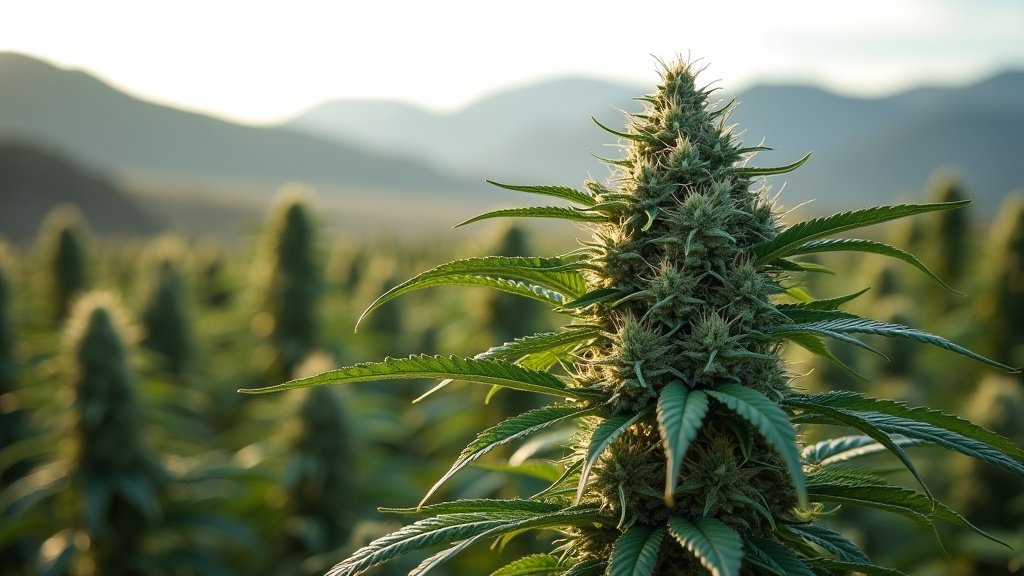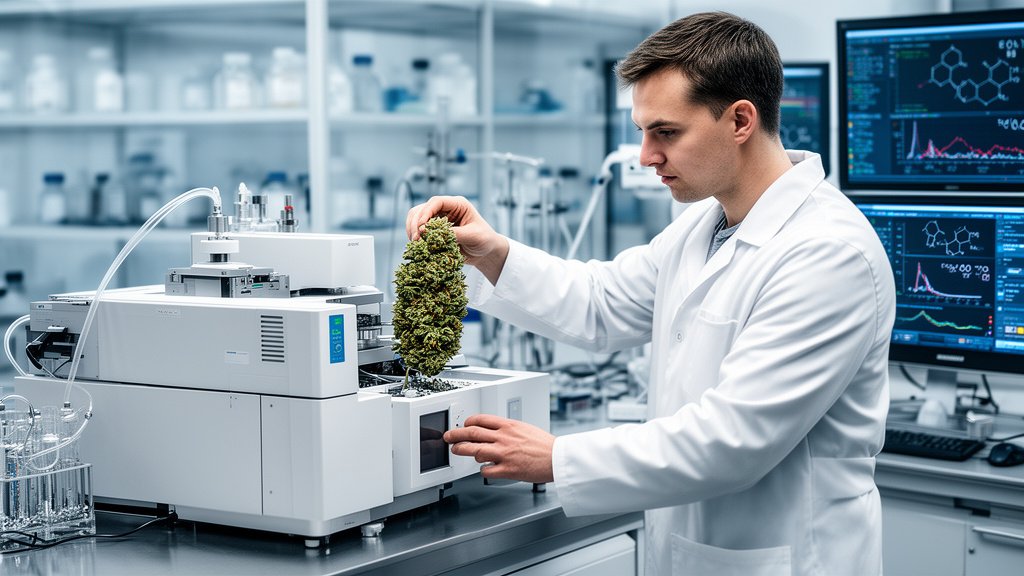
Industry benchmark The Cannabis Bible has officially released its 2026 ‘Canon’ ranking, a definitive list of the top 10 cannabis strains that are currently redefining the standards for terpene complexity, cannabinoid stability, and genetic resilience. This year’s list marks a pivotal shift in the industry, effectively bridging the gap between historical landrace purity and cutting-edge hybrid innovation, providing a crucial roadmap for both discerning connoisseurs and large-scale commercial cultivators navigating an increasingly sophisticated market.
Key Highlights
- Genetic Balance: The 2026 Canon favors a 60/40 split between high-THC modern hybrids and stabilized, region-specific landraces.
- Terpene Dominance: Selection criteria heavily weighted ‘Farnesene’ and ‘Terpinolene’ profiles over traditional myrcene-heavy strains.
- Sustainability Focus: Three of the top 10 cultivars were selected specifically for their drought-resistance and ‘Climate-Ready’ genetic markers.
- Methodology: The rankings are derived from a combination of triple-blind sensory analysis and high-performance liquid chromatography (HPLC) testing.
The 2026 Canon: A Deep Dive into Cultivar Excellence
The cannabis market has moved past the era of ‘high THC at any cost.’ According to the editorial board of The Cannabis Bible, the 2026 landscape is defined by ‘functional complexity.’ Consumers are no longer searching for pure potency; they are chasing the ‘entourage effect’—a synergistic interaction between cannabinoids, flavonoids, and terpenes that produces specific, predictable physiological outcomes. This year’s Canon represents the apex of this pursuit.
The Top 10 Ranking
1. Nebula Haze: Returning to the top spot after a decade, this landrace-hybrid cross features a unique Terpinolene dominance that has set the gold standard for sensory impact.
2. Electric Kush 2.0: Known for its rapid flowering cycle (8 weeks) and exceptional yield consistency, this remains the commercial grower’s gold standard.
3. Solstice Sour: A specific phenotype chosen for the solventless extraction market, boasting exceptionally long trichome stalks that make for high-yield, high-purity rosin.
4. Velvet Resin: The most aromatic entry in the 2026 list, characterized by a complex ‘dank’ profile that remains stable even in high-temperature curing environments.
5. Quantum OG: The ‘workhorse’ strain of 2026. Its genetic resilience to spider mites and powdery mildew makes it the most sustainable crop for outdoor cultivation.
6. Frost Giant: Famous for its aesthetic appeal, this strain produces a layer of trichomes so dense it appears silvery to the naked eye. It is the reigning champion of the high-end boutique market.
7. Lunar Berry: A lower-THC, high-CBD/CBG variant that has dominated the wellness sector, noted for its anti-inflammatory terpene profile.
8. Zenith Cookies: The primary hybrid for modern, climate-controlled indoor facilities, favored for its uniform plant structure and machine-trimming efficiency.
9. Atlas Widow: A revitalized heirloom line that has been backcrossed for modern vigor while maintaining its 1990s-era potency levels.
10. Terra Cotta Gold: A rare, equatorial landrace that offers the deepest historical genetic profile on the list, cherished by purists and genetic breeders.
The Genetic Renaissance: Why Landraces Are Back
For the past five years, the industry was obsessed with ‘exotic’ hybridization, often resulting in diminished genetic diversity. The 2026 Canon signals a correction. The Cannabis Bible notes that breeding programs are now aggressively acquiring and stabilizing landrace genetics—cannabis varieties that have evolved naturally in specific geographical regions without human interference. This is not mere nostalgia; it is a necessity. As global weather patterns become more volatile, the robust, resilient genetics inherent in these heirloom varieties are proving essential for survival in diverse micro-climates. Breeding teams are using these landraces to ‘re-introduce’ vigor into weakened, over-bred commercial lines.
The Economic Impact on Extraction and Retail
Economic data from the 2026 report indicates a bifurcated market. On one end, the low-cost ‘commodity’ cannabis market is shrinking, with retail prices dropping by 14% year-over-year. On the other end, the high-end, ‘Canon-listed’ flower market is seeing a 22% premium increase. This delta is driven by the rise of solventless extraction. Processors are now demanding specific genetics—like Solstice Sour—that yield high-quality bubble hash and live rosin. Cultivators who align their crop rotation with the Canon’s recommended list are seeing significantly higher profit margins, as their product effectively bypasses the commoditized market and enters the specialized, high-demand extraction sector.
Sustainability: The ‘Climate-Ready’ Metric
Perhaps the most significant change in the 2026 criteria is the introduction of the ‘Climate-Ready’ score. For the first time, The Cannabis Bible evaluated strains based on their water-use efficiency and heat-stress tolerance. With states like California and Colorado experiencing record-breaking heat waves during the growing season, strains like Quantum OG and Atlas Widow have surged in popularity. These plants require 15% less water and demonstrate a significantly higher threshold for heat-induced terpene degradation. This metric is now a primary KPI (Key Performance Indicator) for large-scale outdoor cultivation operations, shifting the focus from ‘highest yield per square foot’ to ‘highest viable yield per liter of water.’
The Future of Sensory Testing
Looking toward 2027, the industry is preparing for the integration of ‘electronic noses’ (e-noses) in final quality control. The 2026 Canon was finalized using traditional gas chromatography, but the editors have hinted that next year’s ranking will likely incorporate AI-driven sensory data. By mapping the full volatile organic compound (VOC) spectrum, experts believe we will be able to categorize cannabis not by strain name—which has become increasingly unreliable due to unregulated cross-breeding—but by ‘chemical fingerprint.’ This will likely make the 2026 Canon the last of its kind to rely on phenotypic descriptions, marking the end of an era of nomenclature-based classification and the beginning of a data-driven, chemical-standardized future.
FAQ: People Also Ask
Q: How does The Cannabis Bible determine the ranking?
A: The list is determined through a combination of chemical analysis (HPLC), yield stability testing across three distinct climate zones, and a double-blind sensory evaluation conducted by a panel of 50 industry experts.
Q: Are these strains available for home cultivation?
A: Yes, all 10 strains in the 2026 Canon are available via licensed seed banks. However, the report notes that high-end genetics like ‘Nebula Haze’ require specific environmental controls (RH 40-50% during flowering) to reach their full potential.
Q: Is THC percentage still the primary metric for quality?
A: No. The 2026 Canon explicitly discourages using THC percentage as the sole indicator of quality. The rankings prioritize ‘terpene complexity’ and ‘cannabinoid stability’ over raw THC percentage, as these factors correlate more highly with positive consumer experience.
Q: Will these rankings change throughout the year?
A: The Canon is a static snapshot based on the 2026 harvest cycle. It serves as a benchmark for the year. The next formal update is scheduled for Q1 2027.